Why Preventative Compressor Maintenance Matters
A compressed air system is a utility your operation depends on. Here is what scheduled maintenance actually protects, and how to plan it.
Published by Mechanical Air Services LLC · Written from field experience; not professional engineering advice.
Compressed air is often called the fourth utility, after electricity, water and gas. The difference is that you own and maintain this one yourself. When it fails, nothing that depends on it works.
What maintenance actually protects
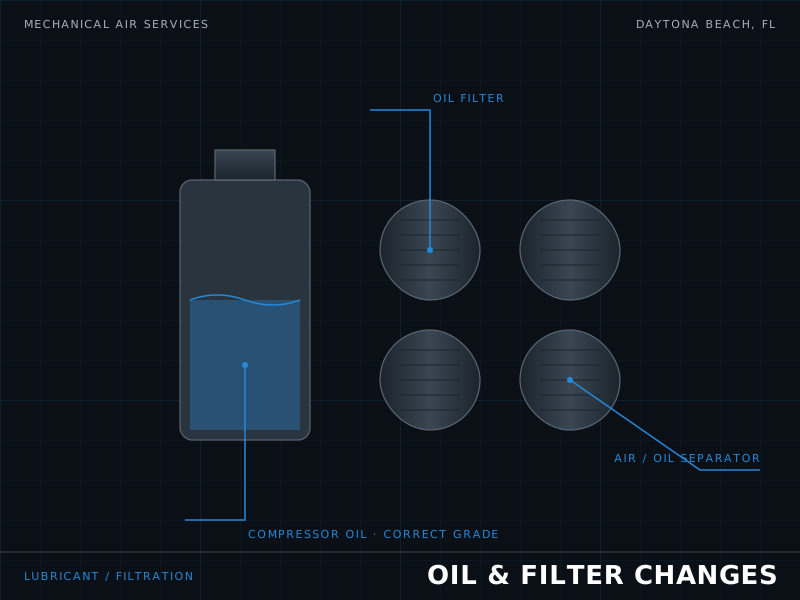
Bearings and rotors. On a rotary screw compressor, the lubricant cools the air end as well as lubricating it. Oil that is past its life, contaminated or the wrong grade runs hotter and carries more wear particles through the bearings. Oil and filter changes on schedule are the single most effective way to extend air end life.
Valves, rings and cylinders. Reciprocating compressors depend on valve plates sealing cleanly and rings holding compression. Dirty intake air, poor lubrication and heat accelerate wear on all of them.
Air quality. Separators, inline filters and dryers only protect your tools and product while they are within their service life. A saturated separator passes oil. A loaded filter drops pressure. A dryer with a failed drain passes water.
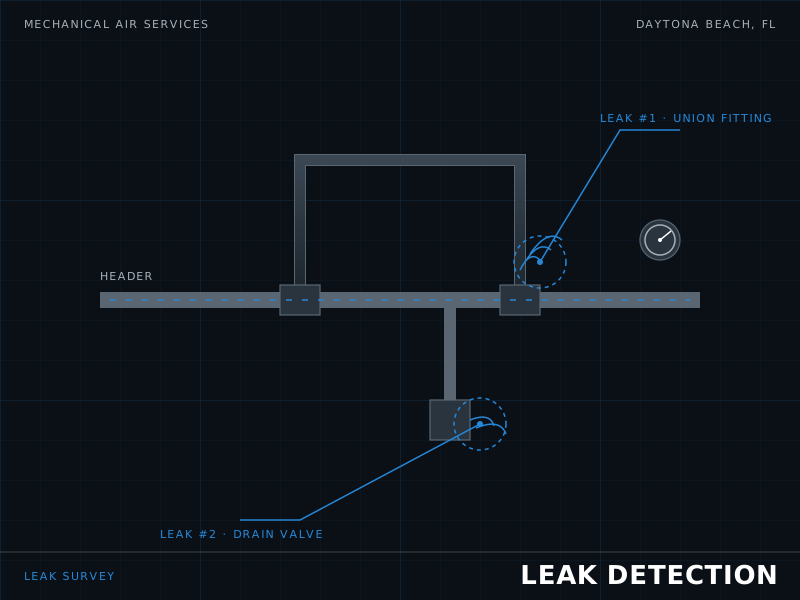
Energy. A compressor working against a dirty cooler, a loaded filter or leaks in the system runs longer and hotter to deliver the same air.
What a maintenance visit includes
A well-run maintenance program documents what was done each visit so you can see trends. Typical tasks include:
- Oil change or oil analysis at the manufacturer interval or by run hours
- Oil filter, air/oil separator and intake filter replacement
- Cooler inspection and cleaning
- Belt, coupling and drive inspection
- Inlet valve, minimum pressure valve and safety valve checks
- Drain operation and condensate handling
- Dryer dew point and inline filter element condition
- Controller fault history review and settings verification
- Operating temperature and pressure recorded at load
Planning around your operation
Run hours drive most intervals, so a compressor running two shifts needs service roughly twice as often as one running a single shift. Build the schedule around your production calendar: planned downtime, slow seasons or weekend windows. The goal is that maintenance never surprises production.
Service agreements
A maintenance agreement sets the interval, the scope and the documentation up front so service happens on time without anyone having to remember to call. Pricing is quoted based on the equipment, run hours and location. If you would like to discuss a plan for one compressor or a whole facility, start with a conversation about what you run and how hard it works.