How to Choose the Right Air Compressor Service Provider
What to ask before you hand over a critical piece of equipment: experience, communication, parts access, emergency coverage and documentation.
Published by Mechanical Air Services LLC · Written from field experience; not professional engineering advice.
Choosing who services your compressor is choosing who you will call when production stops. Here is what to look for, and what to ask.
Hands-on experience with your type of equipment
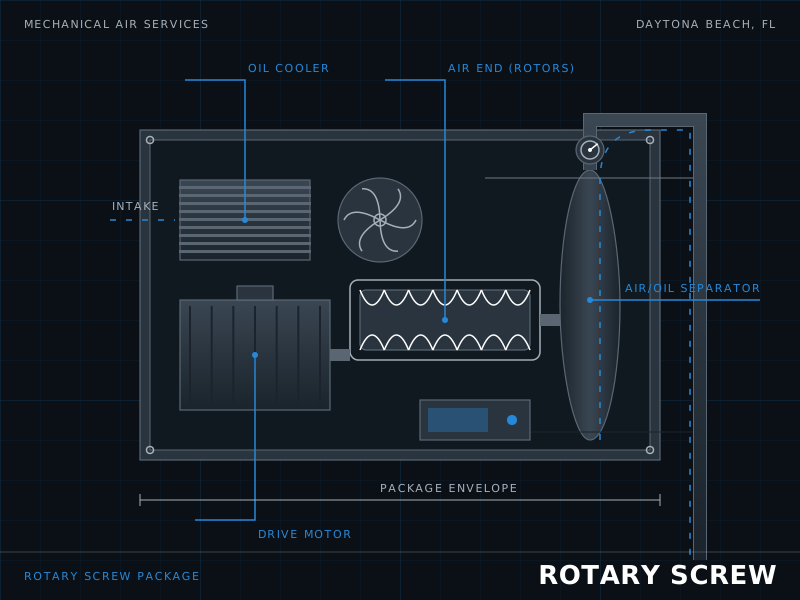
Compressors differ a great deal between a shop piston unit, a rotary screw package with a controller, and an oil-free or scroll unit in a clinic. Ask what the technician works on most and whether they have experience with your brand and model. A provider that says “we will evaluate it” about unfamiliar equipment is being honest; one that promises everything about every machine may not be.
Diagnosis before parts
Good repair starts with finding the cause. Ask how they approach a unit that will not build pressure or keeps tripping on temperature. The answer should involve testing and inspection, not a list of parts to replace.
Communication
You should know before the visit roughly what to expect, and before any work begins what it will cost or how it will be billed. Ask how estimates and diagnostics are handled, and whether there is a charge for them in your situation. Ask how quickly they typically respond to calls and messages.
Emergency coverage
Find out whether emergency service is available, what hours, what number to call, and how response is coordinated. Be wary of guaranteed arrival times; a provider who tells you response depends on location and technician availability is telling you the truth.
Parts access
Ask how parts are sourced for your brand, how quickly common wear items such as filters, separators and oil can be supplied, and whether they can ship parts to you directly for your own maintenance.
Maintenance and documentation
A provider interested in keeping your equipment running, not just fixing it when it breaks, will talk about maintenance intervals and will leave documentation of what was serviced, what was found and what to watch.
Insurance and credentials
Ask whether the business is licensed and insured, and about relevant technician certifications and safety training. Verify what matters for your facility.
Fit
Finally, consider the relationship. A locally owned provider where you speak with the owner or the technician who knows your equipment can be easier to work with than a call center. Ask for the names of a few customers in similar industries, and ask them how the provider handled a problem, not just routine service.
Questions to bring to the first call
- What compressor types and brands do you work on most?
- How do you approach diagnosing a problem before replacing parts?
- How are estimates and diagnostic visits handled?
- Is emergency service available, and how is response coordinated?
- How do you source and ship parts?
- What does a maintenance visit include, and what documentation do I receive?
- Are you licensed and insured, and what credentials do your technicians hold?